- Scientific name
- Ctenocephalides felis
- Also called
- flea, dog flea
- Size
- About 1/16–1/8 in
- Color
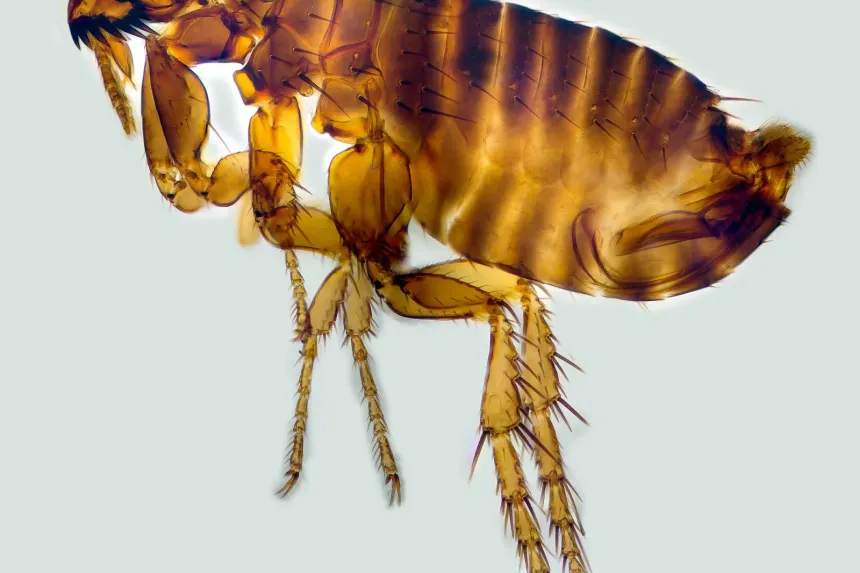
- Dark reddish brown, flattened side to side
- Found in
- Pets, pet bedding, carpets, rugs, upholstered furniture
- Harmful?
- Itchy bites; can spread tapeworms and some diseases
- Active
- Year-round indoors; worse in warm, humid months
- Pro quotes
- $270–$390, often 2–3 visits
The cat flea is the flea on most cats and dogs in the US: a tiny, dark, jumping insect whose bites itch and that can pass tapeworms to pets. Most of a flea problem is out of sight, as eggs, larvae and pupae in carpets and pet beds. The one thing to do: treat every pet with a vet-recommended product and vacuum often for several months.
This page covers how to identify fleas and their bites, the life cycle and where fleas come from. It rests on UC IPM and University of Kentucky guidance; ask your vet which product suits your pet.
How to Identify Fleas: Tiny, Flat and Jumping
- Tiny: about 1/16 to 1/8 inch.
- Dark reddish brown, shiny and flattened from side to side, so they slip between hairs.
- Jumps long distances for its size.
- Flea dirt: black specks in pet fur that turn reddish when dropped on a wet paper towel (digested blood).
Despite the name, the cat flea is also the usual flea on dogs.
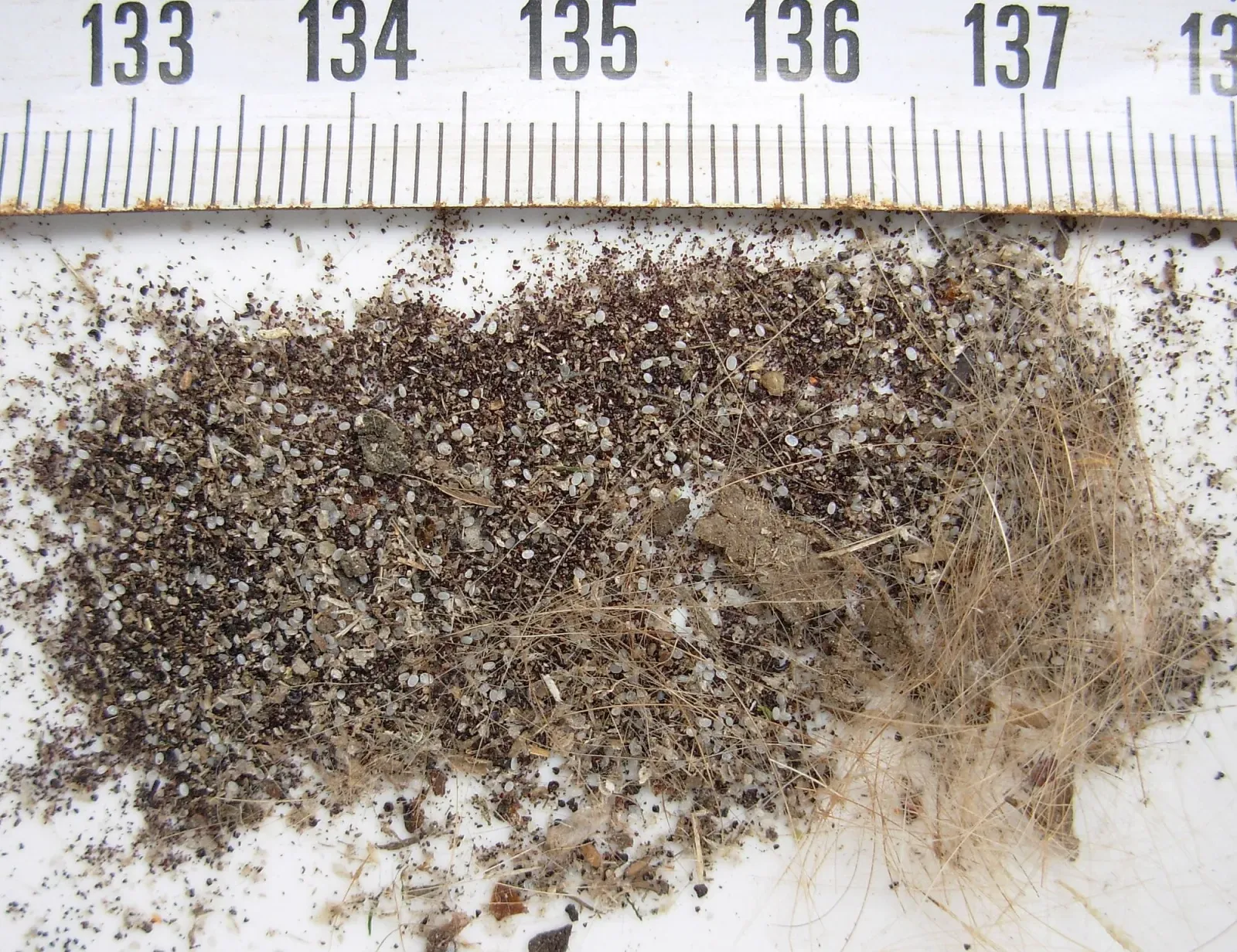
Flea dirt and eggs combed from a pet: black specks, white grains and loose hair. Photo: Auguste Le Roux (CC BY 3.0), via Wikimedia Commons.
Flea vs. Look-Alikes: Jumping, Not Crawling
| Flea | Bed bug | Springtail | |
|---|---|---|---|
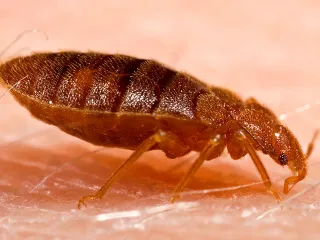
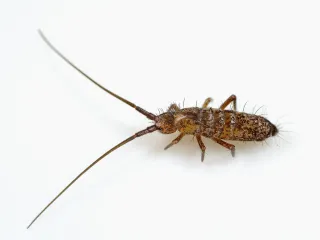
| Body | Flat side to side, dark reddish brown | Flat top to bottom, oval, reddish brown | Round, tiny, gray or white |
| Moves by | Jumping | Crawling | Jumping |
| Found | On pets, carpets, pet beds | Mattress seams, bed frames | Damp spots, sinks, houseplants |
| Bites | Ankles and lower legs | Upper body, after sleep | Don’t bite |
Where Fleas Live: Mostly Off the Pet
- On pets, especially near the tail, belly and neck
- Pet beds, blankets and favorite resting spots
- Carpets and rugs, along edges and under furniture
- Upholstered furniture
Only a small share of a flea population is ever on the animal. Adults feed on the pet’s blood; their eggs fall off into carpets and bedding, where the larvae develop.
The Flea Life Cycle: Why Fleas Return After You Kill Them
| Stage | Where it lives | What it looks like |
|---|---|---|
| Egg | Falls off the pet into carpet and bedding | Tiny white ovals, like grains of salt |
| Larva | Deep in carpet, under furniture, in pet beds | Thin, white, worm-like, avoids light, eats flea dirt |
| Pupa | In a silk cocoon coated with dust and fibers | Hard to see; can wait weeks or months |
| Adult | On the pet | Dark reddish brown, flat from side to side, jumps |
In warm, humid conditions the cycle can finish in a few weeks. Pupae wait until they sense vibration, warmth or breath, which is why people sometimes walk into a home that has stood empty and are bitten right away. Eggs and larvae in carpet are easy to miss; bug eggs and larvae shows what they look like next to other pests’.
Flea Bites on Humans: Itchy Clusters on the Ankles
Small, very itchy red bumps, often in clusters, mostly around the ankles and lower legs. Some have a red halo. Bed bug bites, by contrast, usually show up on the upper body and arms after sleeping. Ankle bites after time in tall grass, with no pet at home, point to chiggers instead. More comparisons are in bug bite pictures.
Are Fleas Dangerous? Itchy, and a Tapeworm Risk for Pets
Bites are itchy, and pets can develop flea allergy dermatitis. Fleas can also pass tapeworms to pets that swallow them while grooming, and can spread diseases such as flea-borne typhus and cat scratch disease, according to UC IPM.
Where Fleas Come From: Pets, Wildlife and Strays
Fleas usually arrive on pets that pick them up outdoors, at the groomer or from other animals. Wildlife that sleeps under decks or in crawl spaces, such as raccoons, opossums and feral cats, can bring cat fleas close to the house, and stray animals can leave a flea population behind in a yard or garage. Indoor-only pets can still get fleas carried in on people’s clothes or by another pet.
How to Confirm It’s Fleas
- Comb your pet with a fine-toothed flea comb over a white towel, especially near the tail.
- Test the black specks on a damp paper towel: flea dirt turns reddish brown.
- Walk across carpet in white socks pulled up high; fleas jump onto them.
What to Do: Treat Every Pet, Then Vacuum and Wash
Treat every pet in the home with a veterinarian-recommended flea product, and keep it up for several months. Wash pet bedding weekly and vacuum carpets and furniture often to remove eggs and larvae. Indoor treatment is usually needed only for heavy infestations. For other pests, browse all pest guides.
Often confused with
Sources
- Fleas (UC IPM)
- Flea Control and Prevention (University of Kentucky Entomology, EF602)
- Smarter Flea Control (University of Kentucky Entomology, EF628)
Last reviewed Oct 5, 2026.
.jpg)