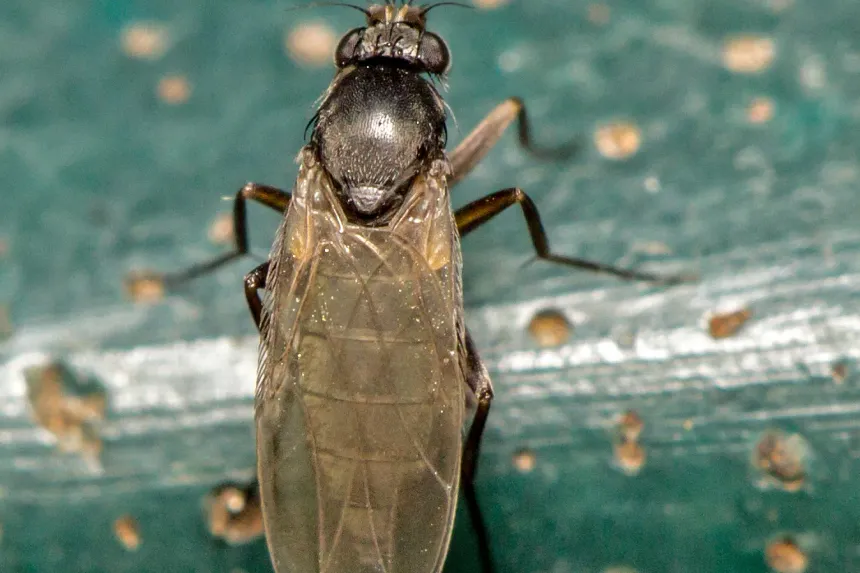
- Scientific name
- Megaselia scalaris
- Also called
- humpbacked fly, scuttle fly, coffin fly
- Size
- About 1/8 in
- Color
- Tan to dark brown
- Found in
- Drains, garbage, under slabs with sewer leaks, near dead animals
- Harmful?
- Contaminates; can carry bacteria
- Active
- Year-round indoors
Phorid flies, also called humpbacked flies, are small flies that run in quick, jerky bursts instead of flying away. They breed in moist, decaying matter of almost any kind, and when they keep coming back after the kitchen is clean, the source is often hidden. The one thing to do: find and remove or dry out the material they breed in.
This page covers how to identify phorid flies, tell them from other small flies and track down a hidden source. It rests on University of Maryland and University of Kentucky guidance.
How to Identify Phorid Flies: Humped Back, Running Escape
- Small: about 1/64 to 1/4 inch, usually around 1/8 inch, tan to dark brown.
- Humpbacked, with the head tucked low.
- Runs in quick, jerky bursts across counters and walls instead of flying away.
- Wing veins are heavy near the front edge, with fainter lines behind.
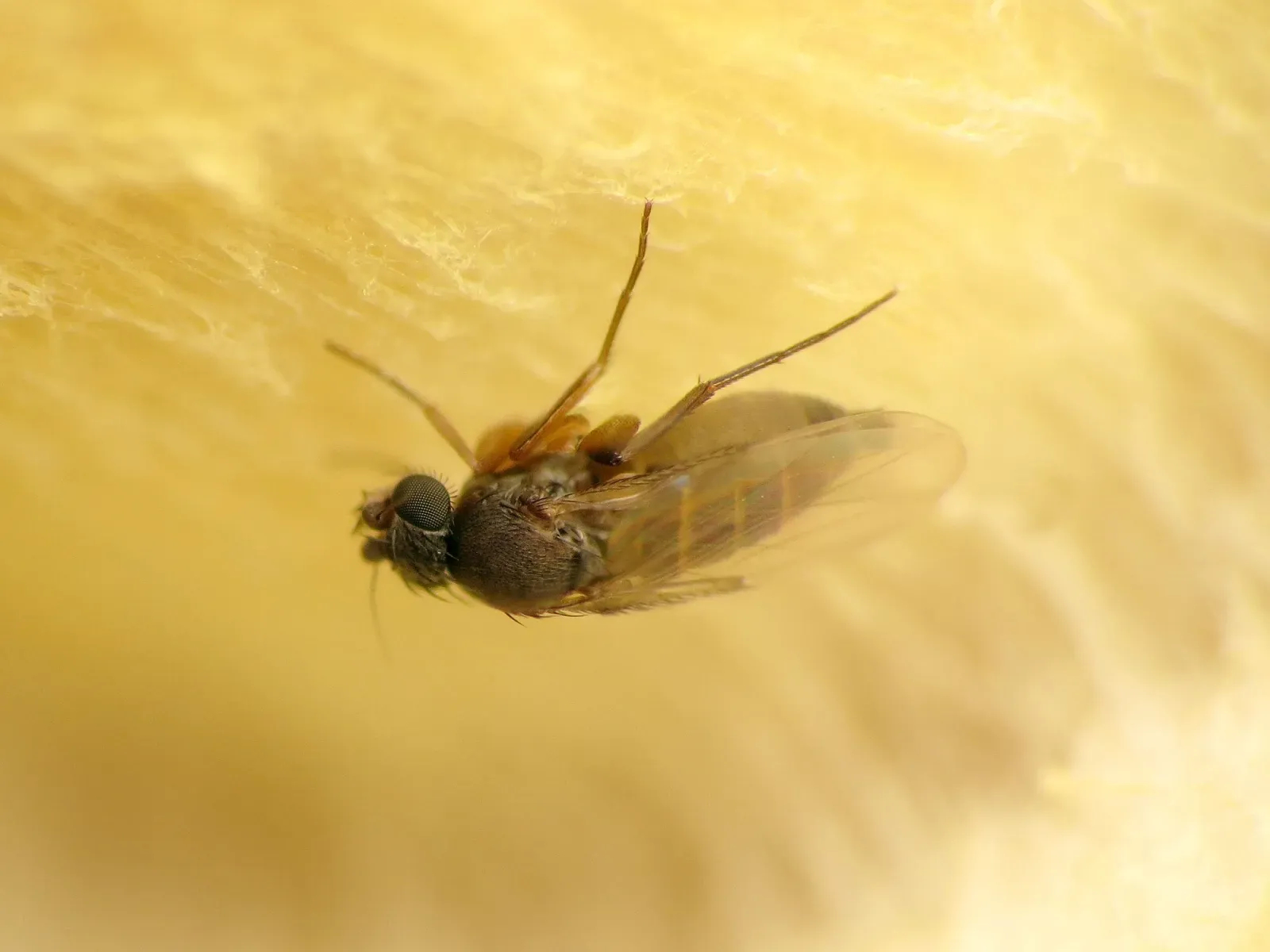
A phorid fly on rotting fruit. They breed in decaying matter, often in drains or garbage. Photo: Katja Schulz (CC BY 2.0), via Wikimedia Commons.
Phorid Flies vs. Look-Alikes: Hump and Hustle
| Fly | How it differs | How to tell |
|---|---|---|
| Phorid fly | Humped back, scuttles | Drains, garbage, hidden decay |
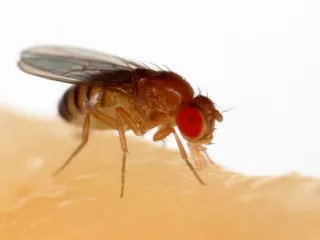
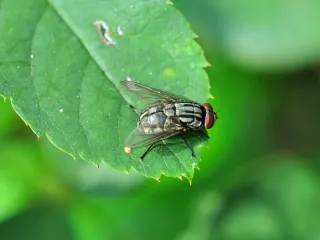
| Fruit fly | Bright red eyes, hovers lazily | Ripe fruit and recycling |
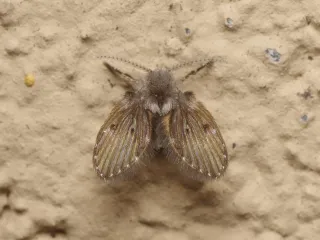
| Drain fly | Fuzzy and moth-like | Sits on bathroom walls |
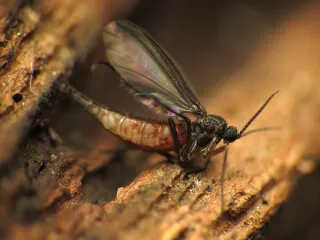
| Fungus gnat | Dark, long legs | Houseplant soil |
They’re often confused with fruit flies, and the difference matters because the breeding sites are different.
Where Phorid Flies Breed: Hidden Decay
- Drains, garbage disposals and trash
- Floors and walls near a leaking or broken drain line
- Near dead rodents or birds in walls, attics and crawl spaces
- Potted plants with rotting organic matter
The University of Maryland says very large numbers on the first floor of a building can mean a broken drain or sewer line under the structure. A dead animal in a wall usually comes with a smell; see dead mouse smell.
Are Phorid Flies Harmful? They Can Carry Bacteria
They can pick up bacteria from decaying matter and carry it to food and surfaces. They don’t bite.
How to Confirm It’s Phorid Flies
- Watch it move: a small fly that runs in bursts rather than flying off.
- Look for the hump behind the head.
- Map where they gather: near one drain, one floor area or one wall.
What to Do: Find the Source
Track down the breeding material and remove or dry it out. Check drains, garbage and under appliances first; a drain test like the one in how to get rid of drain flies shows whether a drain is the source. If flies keep appearing near one floor area, a plumber can test for broken pipes under the slab. For other pests, browse all pest guides.
Often confused with
Sources
Last reviewed Oct 4, 2026.
_(12769306184).jpg)