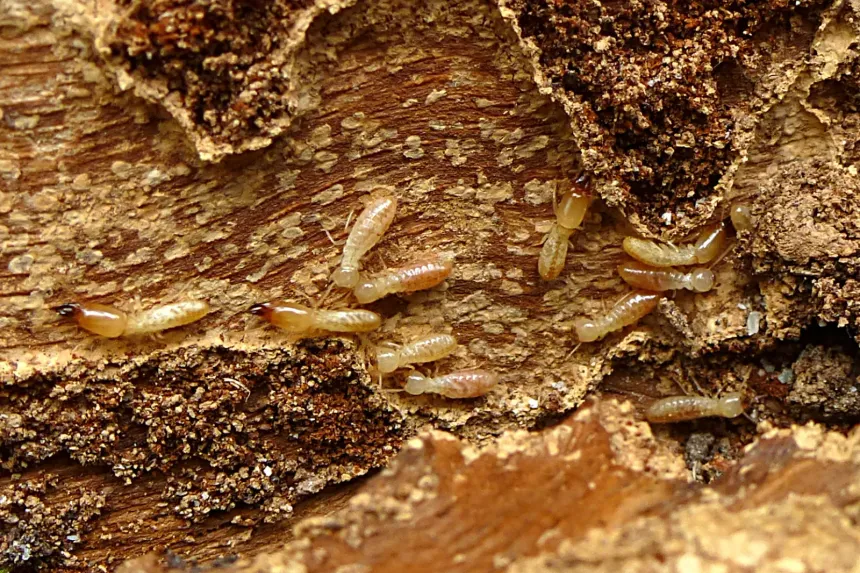
- Scientific name
- Incisitermes species
- Size
- Swarmers about 7/16 in with wings
- Color
- Workers creamy white; swarmers reddish brown, smoky wings
- Found in
- Attic framing, eaves, window frames, furniture; warm coastal states
- Harmful?
- Yes. Damages wood and furniture over time
- Active
- Swarms late summer and fall, often on sunny days
Drywood termites live entirely inside dry wood, with no soil contact, and the usual first sign is a small pile of hard, six-sided pellets. They’re a real structural pest: colonies are small and slow, but a house can hold several, and they damage framing and furniture over years. The one thing to do: get a professional inspection, because the products that control them aren’t sold to homeowners.
This page covers how to identify drywood termites, tell them from look-alikes and confirm an infestation. It rests on UC IPM guidance, with University of Kentucky guidance on subterranean termites for comparison.
How to Identify Drywood Termites: Six-Sided Pellets
- Pellets: the clearest sign. Hard droppings about 1/32 inch long with six flat sides and ridges along their length, pushed out of tiny “kickout” holes (under 2 mm wide) into little piles that look like sand or ground pepper. UC IPM calls the six-sided shape diagnostic for drywood termites.
- Swarmers: about 7/16 inch with wings, reddish brown, flying in daytime in summer and fall. Shed wings near windows are another clue.
- No mud tubes, unlike subterranean termites.
The western drywood termite is the most common species and California’s second most important termite pest. It’s found along the Pacific coast, into the Central Valley and the deserts of Southern California; drywood termites also occur in the desert Southwest, the Gulf Coast, Florida and Hawaii.
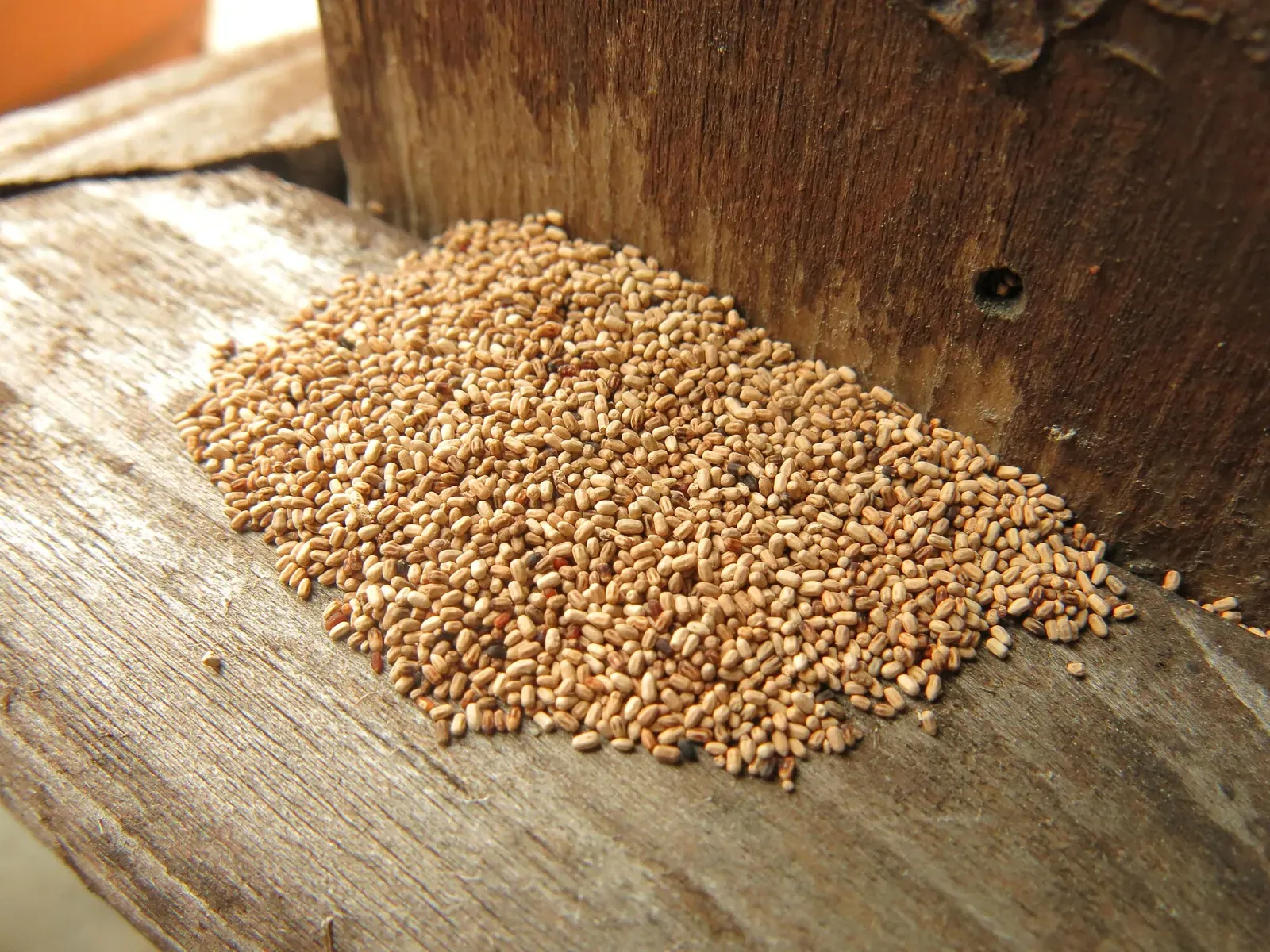
A pile of drywood termite pellets pushed out of wood above, each about 1 mm long. Photo: Sanjay Acharya (CC BY-SA 3.0), via Wikimedia Commons.
Drywood Termite vs. Look-Alikes: Read the Debris
| Suspect | How it differs | How to tell |
|---|---|---|
| Drywood termite | Lives inside dry wood, no soil | Piles of hard, six-sided pellets |
| Subterranean termite | Lives in soil, found in most of the US | Mud tubes; galleries lined with soil, no pellets |
| Dampwood termite | Larger; needs wet wood, often touching soil | Football-shaped pellets with no ridges |
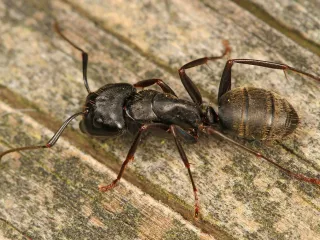
| Carpenter ant | Ant with a pinched waist; nests in damp wood | Coarse shavings mixed with dead ant parts |
| Powderpost beetles | Small beetles in dry, seasoned wood | Flour-fine powder below tiny round holes |
Dampwood termites also swarm in summer and fall, but they’re bigger and fly to lights after dark (UC IPM). To sort the other wood-borers by hole size, see holes in wood.
Where Drywood Termites Live: Attics, Trim and Furniture
- Attic framing, eaves and exposed rafter tails
- Window and door frames, trim and siding
- Wooden furniture and picture frames
Colonies usually have fewer than 1,000 termites, can be spread widely through a building and take years to mature. They live deep inside the wood and are seldom seen except when they swarm (UC IPM).
Are Drywood Termites Harmful? Yes, Slowly
Yes. They damage structural wood and furniture over years, and because colonies are hidden, nobody can be sure how far an infestation reaches or how many colonies a house holds. Finding the full extent can mean removing wall coverings. For pellets left by other pests, see pest droppings.
How to Confirm It’s Drywood Termites
- Check the pellet shape: six flat sides with lengthwise ridges, about 1/32 inch.
- Look for the kickout hole just above the pile, smaller than 2 mm.
- Sweep up the pellets and check a few days later; new pellets suggest activity, though building vibration can shake a few loose.
- Book a professional inspection; pellets alone can’t show whether the colony is active or how far it extends.
What to Do: Inspection, Then Whole-House or Spot Treatment
UC IPM doesn’t recommend do-it-yourself treatment, apart from replacing infested wood. Widespread infestations usually need whole-structure treatment: fumigation (tenting), which means leaving the house for several days, or heat, which holds all the wood at 120°F or more for at least 33 minutes and takes hours instead of days. Small, accessible infestations can be spot-treated by a licensed applicator, but hidden colonies can be missed. Get at least three inspection reports before choosing. For other pests, browse all pest guides.
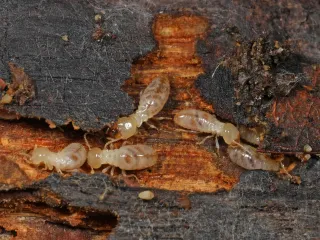
Often confused with
Sources
- Drywood Termites (UC IPM)
- Termite Control: Answers for Homeowners (University of Kentucky Entomology, EF604)
Last reviewed Oct 5, 2026.