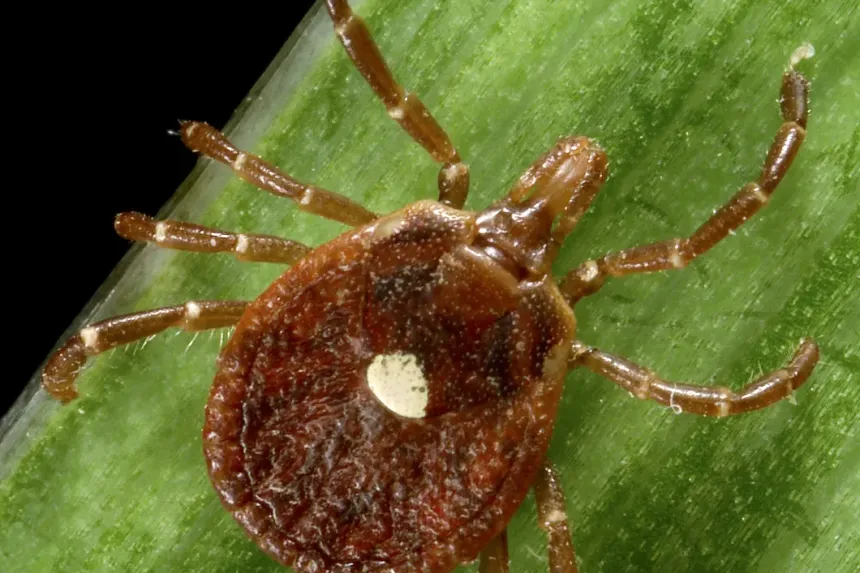
- Scientific name
- Amblyomma americanum
- Size
- Adult female about 1/8 in unfed; up to 1/2 in engorged
- Color
- Reddish brown; female has one white spot on the back
- Found in
- Woods, brush and tall grass; Southeast, East and Midwest, spreading north
- Harmful?
- Yes. Ehrlichiosis, alpha-gal syndrome, STARI
- Active
- Spring through summer
The lone star tick is the tick with one white spot on the female’s back, common across the Southeast and East and spreading north. It’s aggressive, walks toward people and pets, and can spread ehrlichiosis and trigger a red-meat allergy called alpha-gal syndrome. The one thing to do: check yourself every couple of hours outdoors and pull any tick out promptly with fine-tipped tweezers.
This page covers how to identify a lone star tick, its risks and how to avoid bites. It rests on University of Kentucky guidance; talk to your doctor or health care provider about any illness after a tick bite.
How to Identify a Lone Star Tick: One White Spot
- Adult female: reddish brown, about 1/8 inch before feeding, with a single white or silvery spot in the middle of her back.
- Adult male: similar size, with faint pale streaks around the edge instead of one spot.
- Nymphs: smaller, about the size of a pinhead, without the spot; they often bite in large numbers.
- Larvae (“seed ticks”): six-legged and tiny, about the size of a pinhead, abundant in August and September.
- Long mouthparts that make the tick harder to pull out than some others.
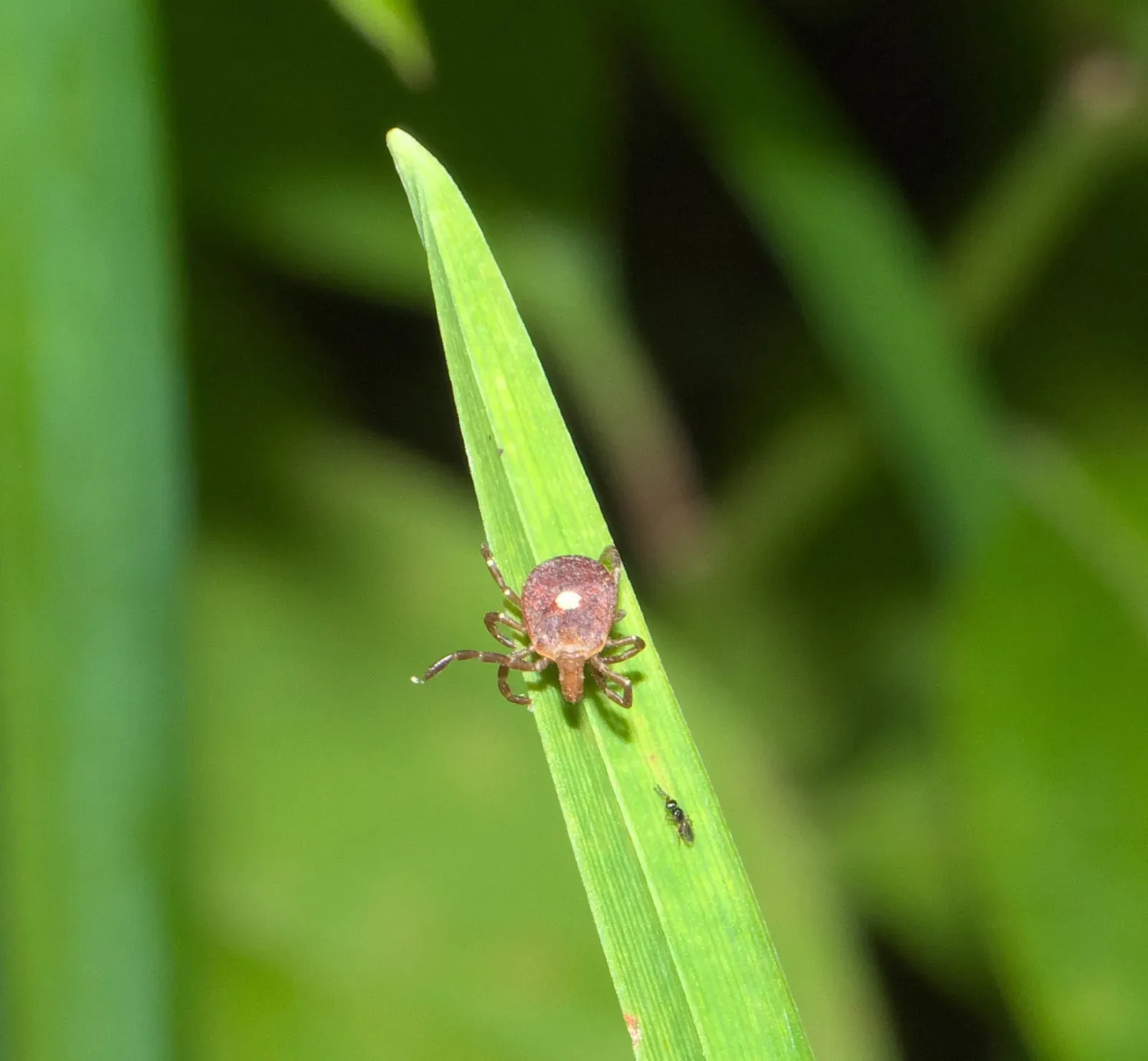
A lone star tick on a grass blade, waiting to grab a passing leg. Check yourself after yard work. Photo: xpda (CC BY-SA 4.0), via Wikimedia Commons.
Lone Star Tick vs. Other Ticks: Check the Back
| Tick | Look for | Main concerns |
|---|---|---|
| Lone star | One white spot on the female’s back | Ehrlichiosis, alpha-gal syndrome |
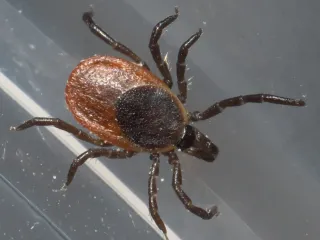
| Blacklegged (deer) | Small; black shield and black legs | Lyme disease |
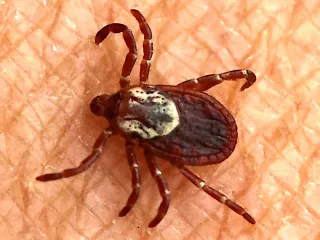
| American dog | Larger, brown with white mottling | Rocky Mountain spotted fever |
The University of Kentucky says the lone star tick is not known to transmit Lyme disease and doesn’t seem to play a significant role in spotted fevers.
When They Bite: March Through September
Lone star ticks are active from March through September. Nymphs and adults are out in spring; larvae are abundant in August and September (University of Kentucky). Each of the three stages needs a blood meal, usually from wild mammals and ground-nesting birds, but they readily feed on people and pets.
Where You’ll Find Them: Woodland Edges and Overgrowth
- Woodland edges, trail edges, brushy areas and tall grass
- Shaded spots where deer and wild turkeys rest
- Yards that border woods
Deer, raccoons and skunks are important hosts and carry ticks into yards. On people, lone star ticks commonly attach behind the knees, around the waist and groin, under the arms, and on the neck and head.
Are Lone Star Ticks Dangerous? Ehrlichiosis and Alpha-Gal
They can spread ehrlichiosis: fever, headache or muscle aches can appear 5 to 10 days after a bite from an infected tick, and many people mistake it for a summer cold. They’re linked to STARI, a rash illness with an expanding rash like Lyme’s, usually within 7 days. And they’re the main cause of alpha-gal syndrome: a sugar in the tick’s saliva can make some people allergic to red meat, with reactions 3 to 6 hours after eating beef, pork or other red meat, as the University of Kentucky explains.
The share of infected ticks in Kentucky is very low, and infected ticks must feed for several hours before passing on a pathogen, so prompt removal helps. Red, itchy spots at the bite are a common reaction to the tick’s saliva and can last two weeks or longer. Clusters of itchy bites after time in grass can also be chiggers; bug bite pictures compare the two.
How to Confirm It’s a Lone Star Tick
- Look for the single white spot on an adult female’s back.
- Check the season and place: spring and summer, near woodland edges.
- Save the tick in a sealed bag if you want it identified or plan to see a doctor.
What to Do: Repel, Check, Remove
The University of Kentucky recommends:
- Repellents: DEET on skin (picaridin is an alternative) and permethrin on clothing where ticks are common.
- Check yourself every 2 hours in tick areas and thoroughly after coming home; ticks wander before they attach.
- Remove a tick with fine-tipped tweezers close to the skin, pulling up with steady, even pressure. Don’t twist or crush it. Clean the bite and your hands with rubbing alcohol or soap and water.
- Dress for it: light colors, pants tucked into socks. Shower afterward and wash clothes in hot water.
In the yard, keep problem lawns mowed to 3 inches or less and clear overgrowth at the edges. Over the long term that can cut tick numbers by about 75%. The full yard plan is in how to get rid of ticks. For other pests, browse all pest guides.
Often confused with
Sources
- The Lone Star Tick in Kentucky (University of Kentucky Entomology, EF648)
- Life with Alpha-Gal Red Meat Allergy (University of Kentucky Entomology, EF656)
- Ticks and Disease in Kentucky (University of Kentucky Entomology, EF618)
Last reviewed Oct 4, 2026.