- Size
- Small cone-shaped pits to 3–4 in burrow openings
- Looks like
- Open holes, mounds or raised ridges
- Where you find it
- Lawns, garden beds, along foundations, under shrubs
- Harmful?
- Damages lawns; rat burrows near the house are a warning sign
- When
- Year-round; worst in spring and fall
Look for an open hole, a mound of dirt, or both. Open 2- to 4-inch holes near foundations are usually rats, small holes linked by grass runways are voles, mounds with no open hole are moles or gophers, and shallow pits mean an animal dug for grubs. The one thing to do: plug a few holes and see which reopen overnight.
This page matches yard holes to their likely digger and says how to confirm it. It rests on UC IPM guidance; only rats here are a trap-and-seal job for the house.
What’s Digging in My Yard? Open Hole or Mound
| Main clue | Size | Where | From |
|---|---|---|---|
| Open burrows with smooth, packed edges | 2–4 in | Along foundations, under shrubs, woodpiles, compost | Norway rats |
| Small holes linked by grass-level runways | 1–2 in | Lawns with dense grass, ground cover | Voles |
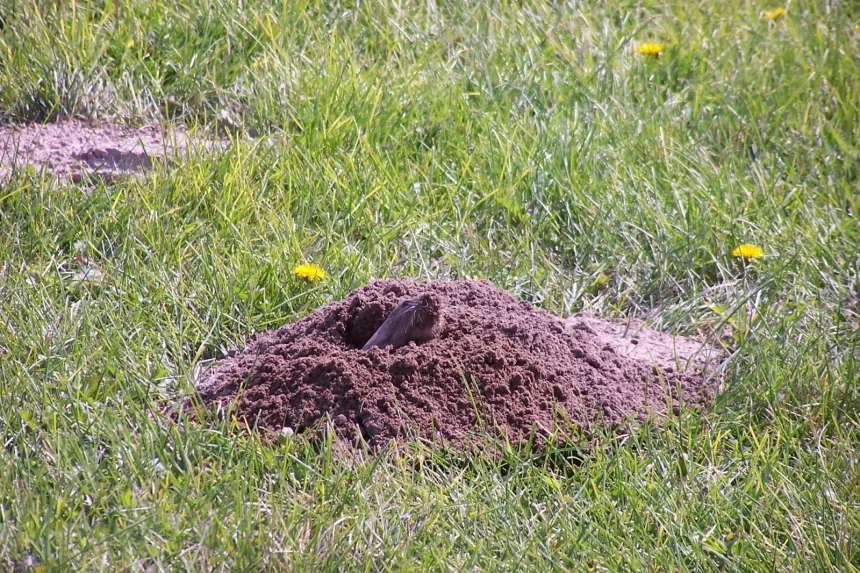
| Round, volcano-like mounds and raised ridges, no open hole | Mounds several inches high | Lawns, garden beds | Moles |
| Crescent- or fan-shaped mounds with a plugged hole to one side | Mounds up to a foot across | Lawns and gardens, mostly in the West and Midwest | Pocket gophers |
| Shallow cone-shaped pits | 3–5 in across | Scattered across lawns | Skunks digging for grubs |
| Patches of sod rolled back | Large areas | Lawns, often overnight | Raccoons |
| Holes with wasps flying straight in and out | About 1/2 in | Lawns, banks | Yellowjackets |
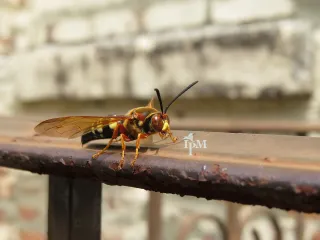
| Holes with a U-shaped pile of loose soil, big wasps in midsummer | About 1/2 in | Bare, sunny, sandy soil | Cicada killers |
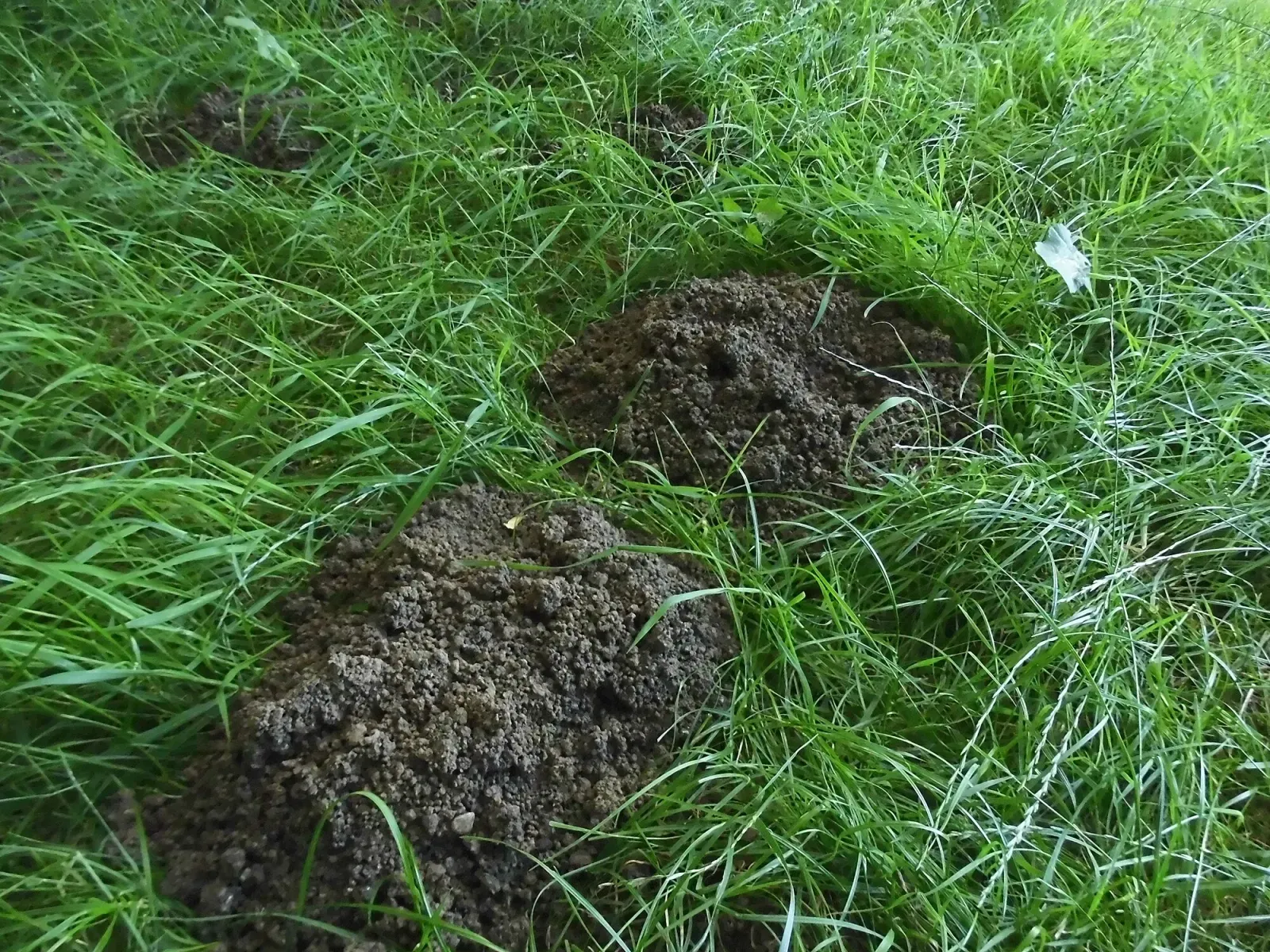
Molehills: round piles of loose soil pushed up through the grass. Photo: Bob Harvey (CC BY-SA 2.0), via Wikimedia Commons.
Rat Holes in the Yard: Smooth, Packed Openings
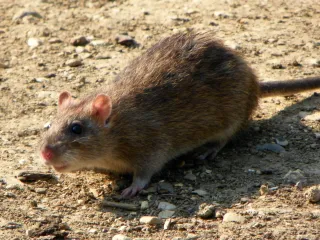
Norway rats dig burrows along foundations, slabs, sheds, woodpiles and garden beds (UC IPM). An active burrow has a smooth, packed opening free of cobwebs and debris, often with fresh dirt fanned out and a worn path leading to food or cover. Burrows next to the house mean rats may be trying to get under it.
Main clue: a smooth, packed opening 2 to 4 inches wide, free of cobwebs, near the foundation or a woodpile.
Voles vs. Moles vs. Gophers: Runways, Ridges or Fans
- Voles run above ground; the clearest sign is well-traveled runways connecting burrow openings (UC IPM). Main clue: grass-level runways linking 1- to 2-inch holes.
- Moles tunnel just under the surface for worms and insects, leaving raised ridges and round mounds (UC IPM). Main clue: volcano-like mounds and ridges with no open hole.
- Pocket gophers push up crescent-shaped mounds with a plugged hole off to one side, and a single gopher can make several mounds a day (UC IPM). Main clue: a fan-shaped mound with a plugged hole off to one side.
Small Pits in the Lawn: Something Hunting Grubs
Skunks dig small pits or cone-shaped holes about 3 to 5 inches across while hunting grubs and insects (UC IPM). Raccoons do similar digging but can also roll back strips of sod. Both point to a grub problem in the lawn.
Main clue: shallow cone-shaped pits 3 to 5 inches across mean skunks; strips of sod rolled back overnight mean raccoons.
Wasps in the Ground: Insects Flying Straight In
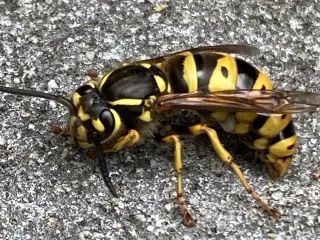
Some holes about 1/2 inch across belong to wasps, not animals. Yellowjackets nest in lawns and banks and fly straight in and out of the entrance. Cicada killers are big wasps that dig in bare, sunny, sandy soil in midsummer.
Main clue: steady wasp traffic at one hole means yellowjackets; a U-shaped pile of loose soil around the hole means cicada killers.
How to Confirm Who’s Digging
- Fill or cover a few holes with soil or crumpled newspaper; holes reopened the next day are active.
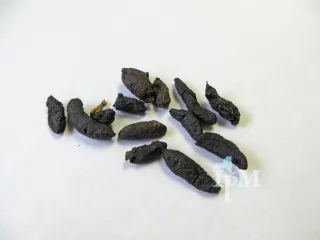
- Look for droppings, tracks in soft soil, and trails worn through grass.
- Watch at dusk and night for rats and skunks, and on sunny afternoons for wasps.
What to Do Next: Rats Near the House Come First
Rat burrows by the foundation are the urgent ones; the plan for rats in the house covers trapping and sealing. For wasps in the ground, see yellowjackets before you go near the hole.
What could have caused it
Sources
- Rats (UC IPM)
- Voles (UC IPM)
- Moles (UC IPM)
- Pocket Gophers (UC IPM)
- Skunks (UC IPM)
- Cicada Killer Wasps (University of Maryland Extension)
Last reviewed Oct 4, 2026.
.JPG)