Do Gnats Bite? Which Ones Bite Humans and Why

Illustration: a man in a teal fleece reads on a screened porch at dusk, a box fan blowing across his chair, a pond beyond the yard.
Do gnats bite? The gnats in your house don’t: fruit flies, fungus gnats and drain flies can’t bite people. The gnats that bite are outdoor flies, mainly biting midges (no-see-ums) and black flies (buffalo gnats). Bitten outdoors near water at dawn, dusk or midmorning? It’s one of them. Long sleeves, a fan and repellent stop most bites.
Cost: about $7–11 in supplies. Difficulty: easy. Call a pro if bites come with trouble breathing or swelling of the face or mouth (call 911), or bites keep appearing indoors after you’ve ruled out gnats. Yard sprays give only brief relief from biting midges and black flies; ask your county’s mosquito control program about area-wide control.
This page covers which gnats bite, what the bites look like, how to treat them, whether they’re dangerous and how to stop them. We haven’t tested anything ourselves; it rests on university extension fact sheets (Kentucky, Arizona, NC State, Florida, Minnesota, UNH), the CDC and Mayo Clinic, plus two list prices.
Which Gnats Bite Humans?
“Gnat” isn’t one insect, which is why getting rid of gnats starts with the type. University of Kentucky entomologists call it an umbrella term for many small flies, and most don’t bite:
| Small fly | Where and when | Bites? |
|---|---|---|
| Fruit fly | Fruit bowl, trash | No |
| Fungus gnat | Houseplants, windows | No |
| Drain fly | Bathroom walls, drains | No |
| Swarming midge | Over lawns and ponds | No |
| Eye gnat | Hovers at your eyes | No, but it feeds on tears and sweat |
| Biting midge, or no-see-um | Near water, dawn and dusk | Yes |
| Black fly, or buffalo gnat | Near streams, daytime | Yes |
Being bitten by gnats in the kitchen is very unlikely; by a lake, marsh or stream it’s a normal part of spring and summer.
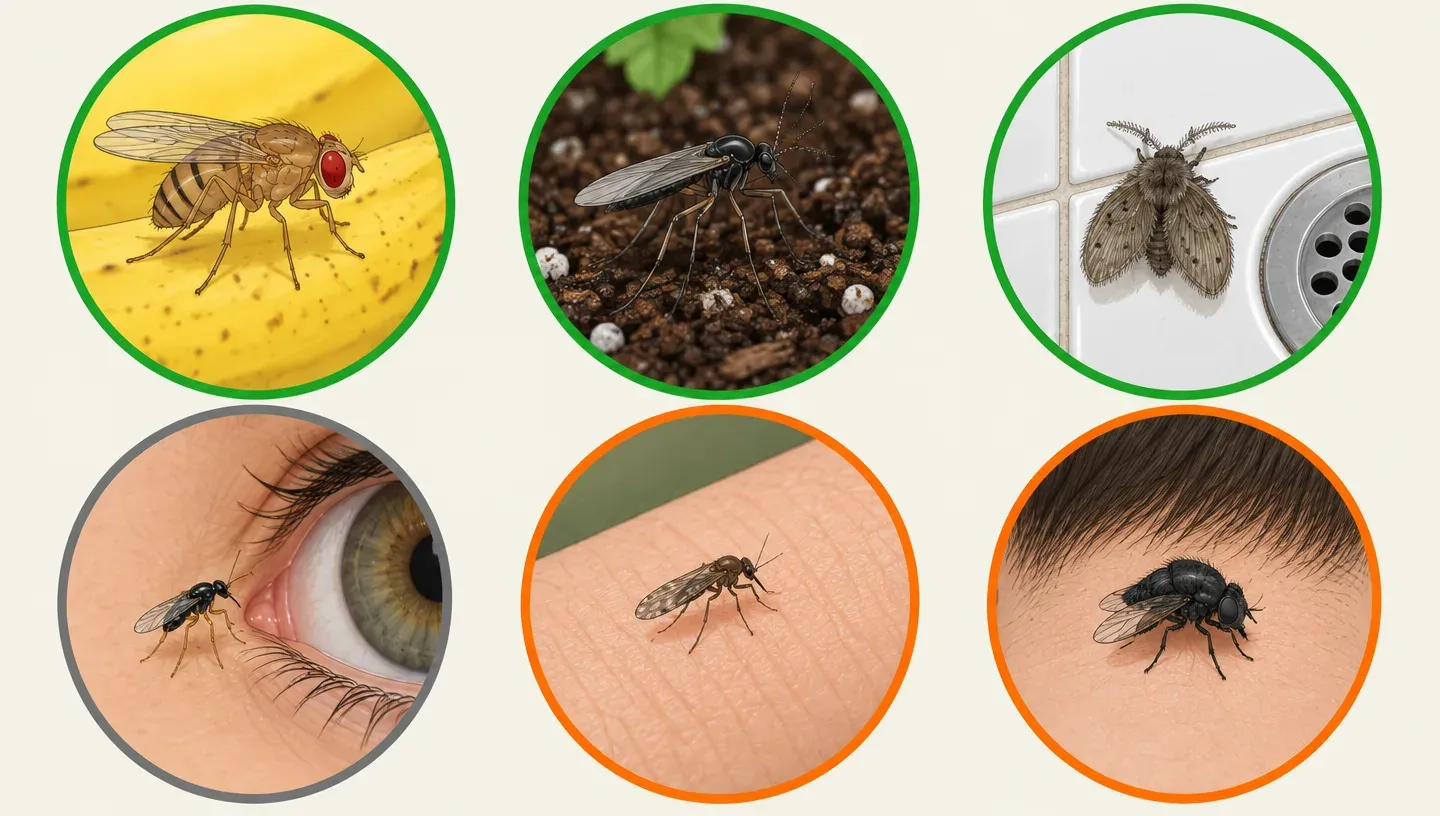
Illustration: a fruit fly, a fungus gnat and a drain fly in green frames; an eye gnat beside an eye in a gray frame; a biting midge on a wrist and a humpbacked black fly on a neck in orange frames.
Do Fungus Gnats Bite? No, and Neither Do Fruit Flies
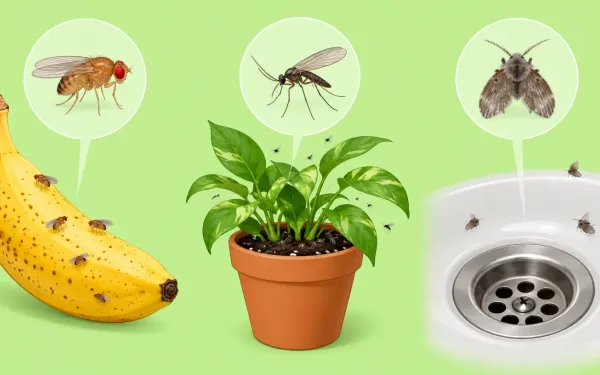
The University of Kentucky’s fact sheet on indoor small flies says fruit flies, fungus gnats, drain flies and phorid flies are non-biting and don’t transmit diseases; their real risk is carrying bacteria onto food. So the itchy bumps aren’t from the houseplants.
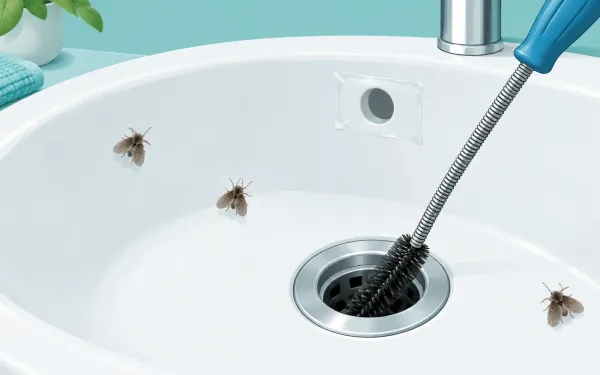
They’re still worth clearing: dry topsoil between waterings is the core of getting rid of fungus gnats, tossing overripe produce starts getting rid of fruit flies, and drain flies fade once you scrub the slime out of the drain.
Biting midges can slip through ordinary window screens, though, and in towns they breed in any constantly wet spot, including overwatered pots and air conditioner runoff (University of Arizona). Bitten indoors with no tiny flies in sight? Look beyond gnats.
Biting Midges: The Gnats You Can’t See
Biting midges are the classic “biting gnats,” also called no-see-ums, punkies or sand flies. NC State says some are only 0.5 mm long, and only the females bite, because they need blood to develop eggs. They bite mostly around dawn and dusk, rarely by day unless it’s overcast and calm (University of Florida), near salt marshes, beaches, ponds and swamps, or soggy lawns and mulch in town. It feels like a sharp sting from something you can’t see.
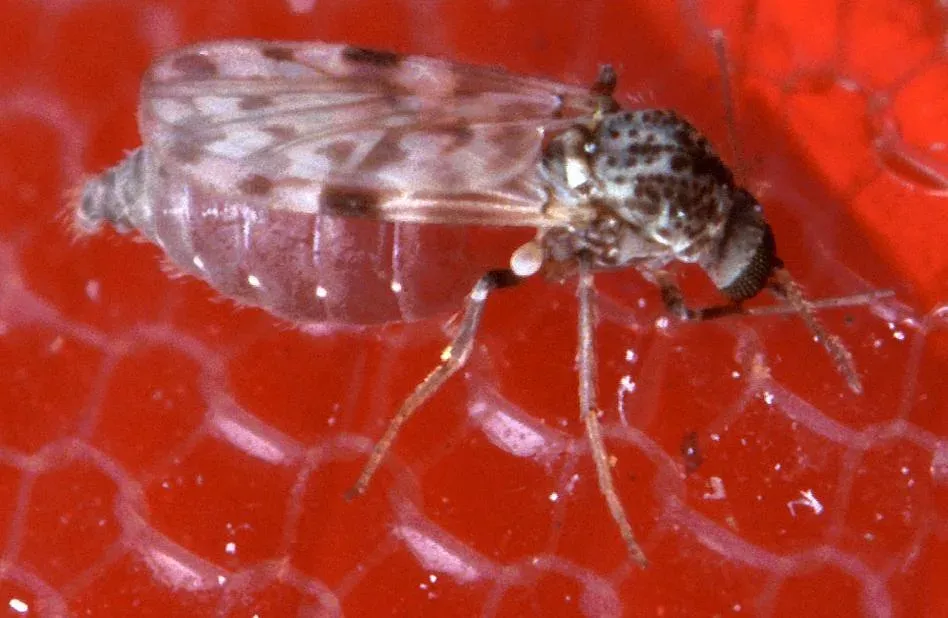
A female biting midge, about 1/16 inch long, magnified. Photo by Scott Bauer, USDA Agricultural Research Service (public domain), via Wikimedia Commons.
Buffalo Gnats: Black Flies That Bite by Day
Black flies are about 1/16 inch long, stout and dark with a rounded back (University of Minnesota). They breed in running water and fly about 10 miles from where they hatch. They bite only in daytime, often peaking 9 to 11 a.m. and 4 to 7 p.m. on humid, cloudy days (UNH), mostly in spring.
They go for the hairline, neck, arms and ankles and crawl under loose sleeves and cuffs. Some species never bite; they just circle your head and crawl into the nose, ears and eyes.
Eye Gnats: Swarm Your Face but Don’t Bite
Tiny flies at the corners of your eyes, nose or a scratch, with no bite, are likely eye gnats. UC IPM says they’re 1/16 to 1/8 inch, shiny black or gray, and can’t pierce skin. They sponge up tears, sweat and mucus and are so persistent that brushing them away doesn’t work.
What Does a Gnat Bite Look Like?
No-see-um bites usually show as small red welts about 1/8 inch across, or water-filled blisters, that itch intensely and can bleed if scratched (University of Arizona). Black fly bites range from small red spots to a lot of itching and swelling, depending on the person (University of Minnesota).
The bite alone rarely proves who did it, so combine it with where and when: welts after dusk near water point to midges, swollen bites on the neck or ankles by a daytime stream point to black flies. For bites you can’t place, our bug bites guide compares the common biters.
How to Treat a Gnat Bite
Most gnat bites itch and swell for a day or two. Mayo Clinic’s first aid for a mild insect bite:
Step 1: Move away from where you’re being bitten, indoors or into a breeze, and wash the bites with soap and water.
Step 2: Cool them for 10 to 20 minutes with a cloth dampened with cold water or filled with ice.
Step 3: Use an anti-itch cream, such as calamine lotion, a baking soda paste or 0.5% or 1% hydrocortisone, several times a day, and an oral antihistamine (cetirizine, fexofenadine or loratadine) if you need one. Try not to scratch; broken skin can get infected.
See a doctor if swelling gets worse, a bite looks infected or you feel unwell. Call 911 for trouble breathing, swelling of the lips, face or throat, dizziness or hives.
Are Gnat Bites Dangerous? Mostly a Nuisance in the U.S.
Minnesota’s black flies aren’t known to spread disease, though black flies do in other parts of the world. Abroad, the CDC says Oropouche virus spreads mainly through infected biting midges in parts of South and Central America and the Caribbean, with no vaccine, so travelers there should prevent bites.
Sensitive people may get long-lasting, painful sores; over-the-counter cortisone cream usually relieves the itch (University of Arizona). Black flies also bite animals, and Mississippi State reports chickens and livestock dying in heavy outbreaks, so call your vet if an animal is badly bitten.
How to Stop Gnat Bites
You can’t kill off biting gnats outdoors: black flies fly in from 10 miles or more away (University of Minnesota). Personal protection is the cheap fix.
Step 1: Time your outdoor work. Near marshes and ponds, avoid dawn and dusk; in black fly season, go inside, where they hesitate to follow (Mississippi State).
Step 2: Run a fan. Biting gnats are weak fliers; University of Florida recommends high-velocity fans on screened porches.
Step 3: Wear light, closed clothing. Long sleeves, pants tucked into socks and a hat; UNH says orange, yellow and light blue attract black flies less than dark green, brown and red. Add a mesh head net in heavy black fly areas.
Step 4: Use repellent at the gaps, on wrists, ankles and the belt line. Mosquito repellents work on both but wear off faster against black flies; UNH rates DEET most effective, with picaridin and IR3535 nearly as good. Don’t use oil of lemon eucalyptus or PMD on children under 3 (CDC).
Step 5: Check your screens. No-see-ums pass through standard 16×16 mesh; 30×30 keeps them out (University of Arizona). Renting? Ask your landlord in writing to repair or upgrade them.

Illustration: by a spring stream, a man in a teal fleece zipped to the chin, a tan hat with a mesh head net and light pants tucked into his socks, tiny black flies hovering around him.
| Item | Typical cost |
|---|---|
| Picaridin repellent spray, 4 oz | $6.99 |
| Mesh head net | $3.96 |
U.S. list prices at Walmart, October 1, 2026, before tax and shipping.
Yard sprays? Usually not worth it. NC State says sprays and fogs work only briefly against adult biting midges because more fly in, and fogging buys black fly relief for hours. Near marshes or rivers, ask your county’s mosquito control program instead.
- Go inside or into a breeze when bites start.
- Avoid dawn and dusk near marshes and ponds.
- Tuck pants into socks and wear light colors.
- Reapply repellent on wrists, ankles and belt line.
- Upgrade porch screens to 30×30 mesh.
- Clear house gnats at the source, not with bite cream.
Common questions
Only female biting midges and black flies bite, because they need a blood meal to produce eggs. Males feed on nectar and pollen, and house gnats don’t bite at all.
The sources we checked don’t describe biting midges or black flies biting through fabric. They bite exposed skin and crawl under loose cuffs and collars, which is why tucked, closed clothing works.
Sources and further reading · 11
- University of Kentucky Entomology: Non-Biting Midges and Gnats (ENTFACT-632) and Small Flies (ENTFACT-657).
- UC IPM: Fungus Gnats and Eye Gnats.
- University of Arizona Cooperative Extension: Something’s Biting Me, but I Can’t See It.
- NC State Extension: Biting Midges and Their Control.
- UF/IFAS: Biting Midges, No-See-Ums (EENY349) and Biting Midges of Coastal Florida (ENY629).
- University of Minnesota Extension: Black Flies.
- UNH Extension: Black Flies.
- Mississippi State University Extension: What to Do about Black Flies (Buffalo Gnats).
- CDC: About Oropouche and Preventing Mosquito Bites.
- MedlinePlus: Insect Bites and Stings.
- Mayo Clinic: Insect Bites and Stings: First Aid (April 10, 2024).