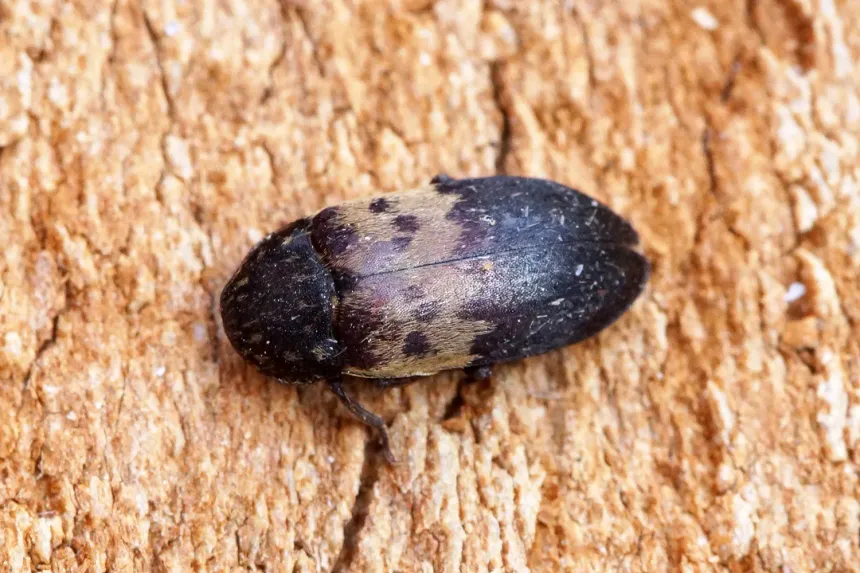
- Scientific name
- Dermestes lardarius
- Size
- About 1/3 in
- Color
- Dark brown to black, pale yellowish band with six dark spots
- Found in
- Pet food, dried meat, cheese; dead insects or rodents in walls and attics
- Harmful?
- Spoils food; larvae bore into wood to pupate
- Active
- Adults seen in spring and early summer
The larder beetle is a dark, 1/3-inch relative of carpet beetles with a pale band across its back that feeds on animal protein: dried meat, cheese, pet food, and dead insects or animals. Finding several indoors often means something died in a wall, chimney or attic. The one thing to do: find and remove the food source, then vacuum and seal pet food in bins.
This page covers how to identify a larder beetle and its larvae, tell it from look-alikes and track down the source. It rests on University of Kentucky, Colorado State and Oklahoma State University Extension guidance.
How to Identify a Larder Beetle: Pale Band With Six Spots
- About 1/4 to 3/8 inch, oval and dark brown to black.
- A pale yellowish band across the front third of the wing covers, with about six dark spots in it.
- Larvae: up to about 1/2 inch, brown and covered in bristles, with two sharp, curved spines on the tail end.
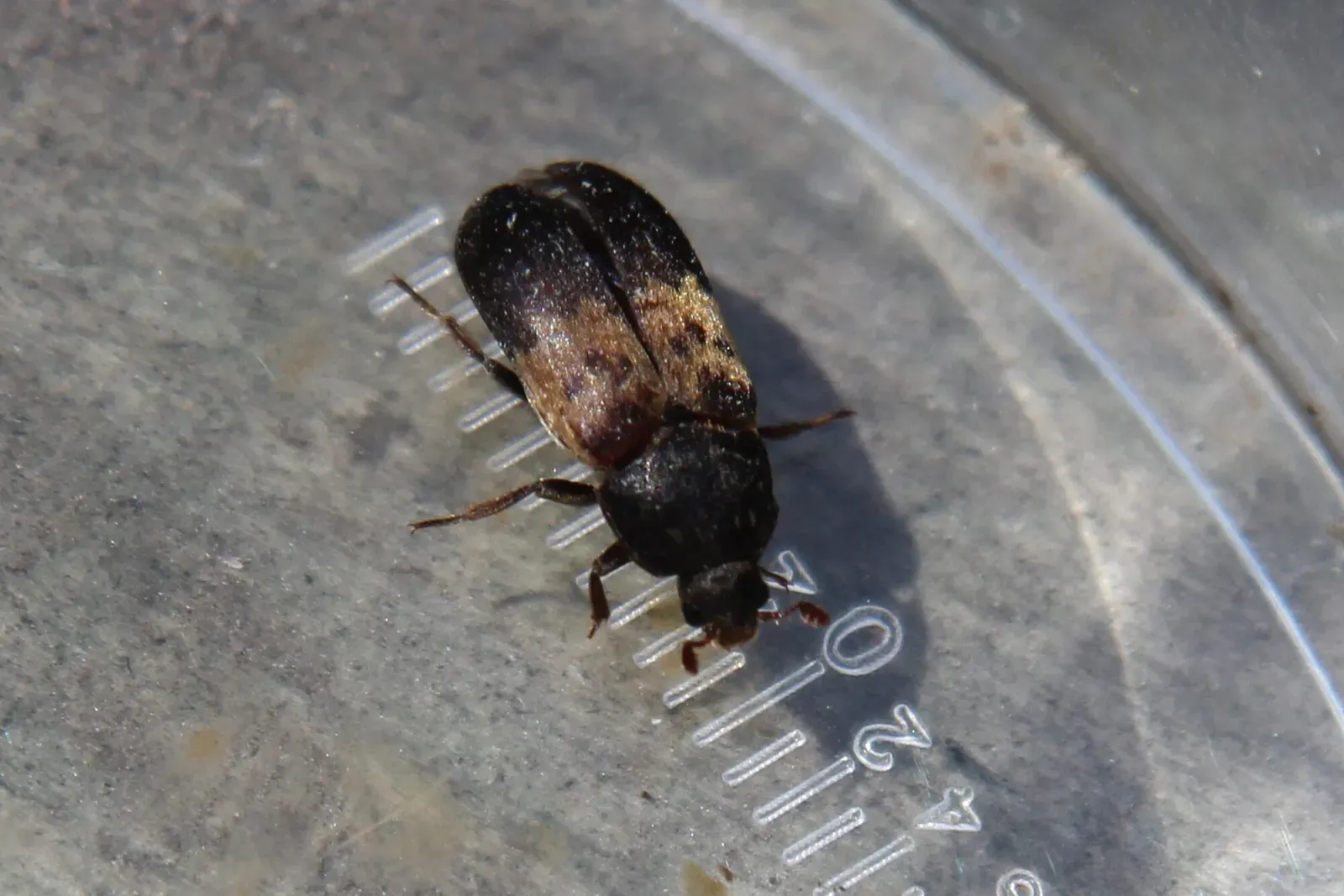
A larder beetle beside a millimeter scale: about ⅓ inch, with the tell-tale pale band. Photo: Superbass (Public domain), via Wikimedia Commons.
Larder Beetle vs. Look-Alikes: The Band Gives It Away
| Beetle | How it differs | How to tell |
|---|---|---|
| Larder beetle | Larger, pale band with dark spots | Larva has two curved tail spines |
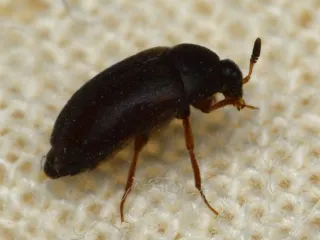
| Black carpet beetle | Smaller, plain shiny black | Smooth golden larva with a long tail tuft |
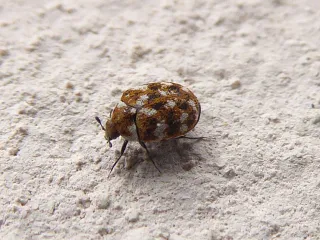
| Varied carpet beetle | Tiny, spotted white, brown and yellow | Banded, bristly larva |
Where You’ll Find Them: Near Protein, Alive or Dead
- Dry dog and cat food, especially open bags
- Dried and cured meats, cheese
- Near a dead mouse, bird or a pile of dead flies in walls and attics
- Wood near the food source, where larvae bore small holes to pupate
A mass of dead cluster flies in an attic or wall is a common food source. Full-grown larvae leave the food to find a place to pupate, and the University of Kentucky says these wanderers, which can burrow into wood, may be the first sign of a problem.
Are Larder Beetles Harmful? They Spoil Food
They spoil food, and larvae can bore into wood, insulation and even soft building materials to pupate. They don’t bite people. Small round holes near a food source can be larder beetle larvae; holes in wood sorts other causes.
How to Confirm It’s a Larder Beetle
- Look for the pale band with dark spots across the wing covers.
- Find a larva and check for two curved spines at the tail.
- Follow the beetles back to pet food, cured meat or a dead animal.
What to Do: Remove the Food Source
Find the food source: check pet food, pantry shelves, and walls or attics for dead animals or insects. Remove it, vacuum the area with a crevice tool, scrub shelves with hot soapy water, and store pet food in sealed bins. For home-cured meat, the University of Kentucky recommends a clean, sealed storage room with 30-mesh screens and wrapping the meat in paper or cloth bags. For other pests, browse all pest guides.
Often confused with
Sources
- Dermestid Beetles (Carpet Beetles) (Colorado State University Extension)
- Dermestid (Carpet) Beetles (Oklahoma State University Extension)
- Protecting Home-Cured Meat from Insects and Mites (University of Kentucky Entomology, EF638)
Last reviewed Oct 4, 2026.
.jpg)